
Analytical Monitoring Report
1. Context
The fourth week of April 2026 was marked by heightened tension in the information space, particularly in its final days. Discrediting of opponents maintained a leading position, with a strong emphasis on the sensitive occasion of the Day of Remembrance of the Victims of the Armenian Genocide. The subsequent Citizens’ Day, along with what Prime Minister Nikol Pashinyan described as a “khorovats party,” were also actively instrumentalized for mutual criticism and reputational attacks.
At the same time, narratives related to peace and security continued to evolve within the week’s information agenda. On the one hand, discussions focused on opportunities for regional cooperation and the unblocking of communications (within the framework of the TRIPP project). On the other hand, Alen Simonyan stated that Azerbaijan, through its influence, is hindering the process of opening the Armenian-Turkish border.
2. Summary Statistics
Narrative Dynamics (February – April 2026)
Publication counts by week
2.1. Analysis of Narratives and Their Frequency
Key trends and narratives of the week:
- Discrediting of Opponents (410 publications) – This narrative continues to dominate the landscape. On the evening of April 23, the burning of the Turkish flag during the torchlight procession sparked widespread reactions across public and political circles. On the one hand, Prime Minister Nikol Pashinyan characterized the act as irresponsible and unacceptable; on the other, counter-arguments framed the condemnation itself as an expression of weak or fearful politics. April 24 was followed by Citizens’ Day. The “khorovats party” organized at Republic Square triggered a strong wave of criticism. Many argued that such a celebratory event, taking place immediately after April 24, was incompatible with the public mood. Narek Karapetyan, a member of the Strong Armenia Party, described it as the “Day of the Deceived Citizen.” The authorities, however, maintained that citizens should not live in constant mourning and that the opposition’s tactic of keeping people in a state of grief and lamentation would not be effective.
Another notable development was the launch of the Stugel.am platform, presented by the ruling team as a tool to combat disinformation, while the opposition framed it as a new instrument targeting political competitors. - External Influence (298 publications) – This narrative acquired an additional layer. U.S. senators sent a letter to major technology platforms, urging them to pay attention to potential external interference during Armenia’s elections. Within the narrative, this step was portrayed as an attempt at external interference itself, suggesting that the senators aimed to influence social media platforms to restrict the activities of opposition political forces.
- Peace and TRIPP (278 publications) – The Azerbaijani Ministry of Foreign Affairs also reacted to the burning of the Turkish flag during the April 23 torchlight procession, emphasizing the unacceptability of such actions. At the same time, statements regarding dialogue and cooperation were also voiced. Ilham Aliyev noted that mutual visits between representatives of Armenian and Azerbaijani civil societies could contribute to peace and stabilization. In this context, the Azerbaijani Ombudsman’s Office reported that during a meeting with Ruben Vardanyan, the possibility of a visit by Armenia’s Human Rights Defender Anahit Manasyan to Baku was also discussed, indicating the Azerbaijani side’s willingness to facilitate such a visit. Meanwhile, the Office of the Human Rights Defender of Armenia stated that it had not received any official proposal or confirmation regarding such cooperation. Cultural heritage also became a subject of discussion: satellite images indicated the destruction of the main cathedral of Stepanakert. Addressing the issue, Nikol Pashinyan stated that raising the matter on international platforms is not currently being considered. At the same time, discussions around TRIPP were further fueled by a Euronews report stating that the United States and Azerbaijan had begun negotiations on the TRIPP transport corridor project.
Analysis of Other Narratives:
- Energy and Infrastructure (291 publications) – The core of this narrative centered on Armenia’s heavy dependence on imported gas, emphasizing that political factors outweigh market dynamics in this domain.
- Armed Forces (289 publications) – Public attention was drawn to a protest by relatives of those missing from the 44-day war. They blocked Baghramyan Avenue, demanding parliamentary hearings in the National Assembly.
- Borders and Trade (278 publications) – The narrative highlighted economic pressures and developments related to the opening of the Armenian-Turkish border. The worsening conditions for Armenian products in the Russian market were framed as an ongoing and deepening trend. In parallel, the political discourse emphasized the deadlock in the Armenian-Turkish border opening process. Alen Simonyan stated that Azerbaijan, through its influence, is obstructing this process, creating a situation in which, as he put it, Turkey becomes a “hostage” to these relations.
- Existential Threat (246 publications) – Elections continue to be framed as the last opportunity to preserve Armenia’s sovereignty, where the choice is often equated with either the loss of statehood or the deepening of external control.
- Europe and Armenia (238 publications) – The main focus was on the deepening of Armenia–EU cooperation and on the “European Union Partnership Mission in Armenia” (EUPM Armenia), which aims to support Armenia in addressing hybrid threats. This, along with the Armenia–EU summit scheduled for May 4–5 in Yerevan, was presented as a consolidation of the Western vector.
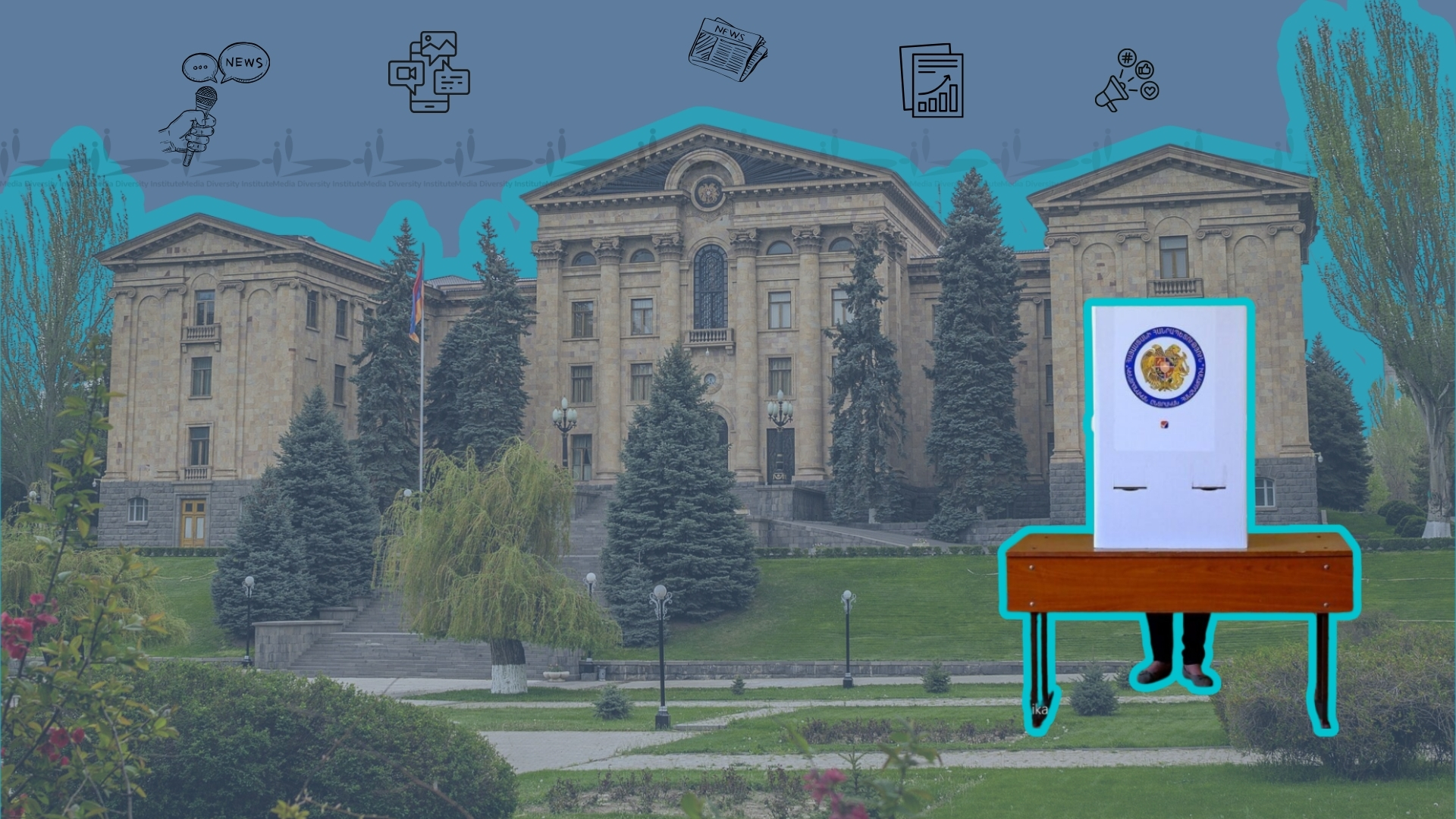
- Elections and the CEC (205 publications) – During the week, several developments were recorded concerning both the administrative phase of the electoral process and political realignments. The Central Electoral Commission summarized the nomination phase, announcing that applications had been received from 19 political forces. Alongside the electoral process, law enforcement actions were also reported. In Lori Province, searches were conducted in the homes of supporters of “Strong Armenia” within the framework of a criminal case related to participation in or coercion into attending gatherings. The political field also saw attempts at consolidation and resource pooling: the “Country to Live” party and “Strong Armenia” signed a memorandum of cooperation. Meanwhile, the “United National Socialist Party” (MASP), founded by Hovik Aghazaryan and Hakob Aslanyan, announced its decision not to participate in the elections. During the week, the “Against Everyone” party reported damage to its bus, stating that unidentified individuals posing as municipal employees had vandalized campaign materials.
- Church and State (194 publications) – Statements by Prime Minister Nikol Pashinyan continued, alleging that the Church serves the interests of other countries.
2.2. Analysis of Narrative Intersections
The main intersection of the week occurred between the “Borders and Trade” and “Peace and TRIPP” narratives. While the TRIPP project and prospects for cooperation were presented as part of the peace agenda, Alen Simonyan’s statement that Azerbaijan is hindering the opening of the Armenian-Turkish border created a contrasting narrative.
Another key intersection emerged between “Elections and the CEC” and “Discrediting of Opponents.” Developments related to the electoral process (nominations, alliances, and law enforcement actions) were frequently accompanied by mutual accusations, turning the electoral agenda into a platform for reputational attacks.
2.3. Platform Analysis
- Facebook (903 publications) – The primary platform during the monitoring period, particularly for the narratives of “Discrediting of Opponents” (162) and “Europe and Armenia” (108).
- Telegram (1009 publications) – Dominant in circulating the “Armed Forces” (138) and “Energy” (130) narratives.
- YouTube (590 publications) – Served as the main platform for analytical content related to the “Existential Threat” narrative (96).
- TikTok (246 publications) – Used primarily for short political statements and discrediting videos.
2.4. Actor Analysis
- RA media platforms and news outlets – This group focused on covering the CEC nomination process and international developments related to the TRIPP project.
- Anonymous and/or unidentified information websites – Disseminated content contributing to public polarization, often based on hate speech.
- Political figures and actors – Prime Minister Nikol Pashinyan (through live streams and TikTok) and opposition leaders emerged as the main generators of the week’s dominant narratives.
3. Chronological Dynamics
Narrative Distribution in Social Media
April 20–26, 20264. Conclusions and Key Findings
- The events surrounding the Day of Remembrance of the Armenian Genocide and the subsequent Citizens’ Day were transformed into instruments of political struggle, actively used for mutual discrediting and the positioning of political forces.
- The U.S.- Azerbaijan direct negotiations on TRIPP were interpreted in the information space as a potential disregard for Armenia’s interests.
- Within the peace agenda, both narratives of cooperation (civil society engagement, corridor projects) and obstruction (challenges in opening borders, mutual accusations) were simultaneously promoted, creating an environment of uncertainty and distrust.
- 2 alliances and 17 parties - The Central Electoral Commission received applications from 19 political forces to participate in the 2026 parliamentary elections.
The monitoring was conducted by the “Media Diversity Institute” (MDI) informational NGO.
The report was developed in accordance with the methodology for monitoring the 2026 parliamentary elections in the Republic of Armenia. Data collection and report generation were carried out using AI-powered tools:
- the Letsdata digital monitoring tool was used for collecting primary source data,
- while Claude, NotebookLM, and Gemini were used for report generation.
The analysis is based on a pre-selected list of 250 sources (i.e., actors). The process was accompanied by professional oversight, involving a monitoring specialist and a data collection specialist, to ensure reliability.